
Customer comfort is subjective, but repeated comments can reveal a practical facility issue. One patron might find a corner booth comfortable while another feels a draft. When several customers mention that the room is too warm, or staff notice a recurring chill near the service counter, the useful response is to capture what happened instead of repeatedly changing the thermostat. A simple log for comfort complaints and HVAC service visits can turn scattered observations into organized context for a landlord, building manager, or qualified HVAC professional.
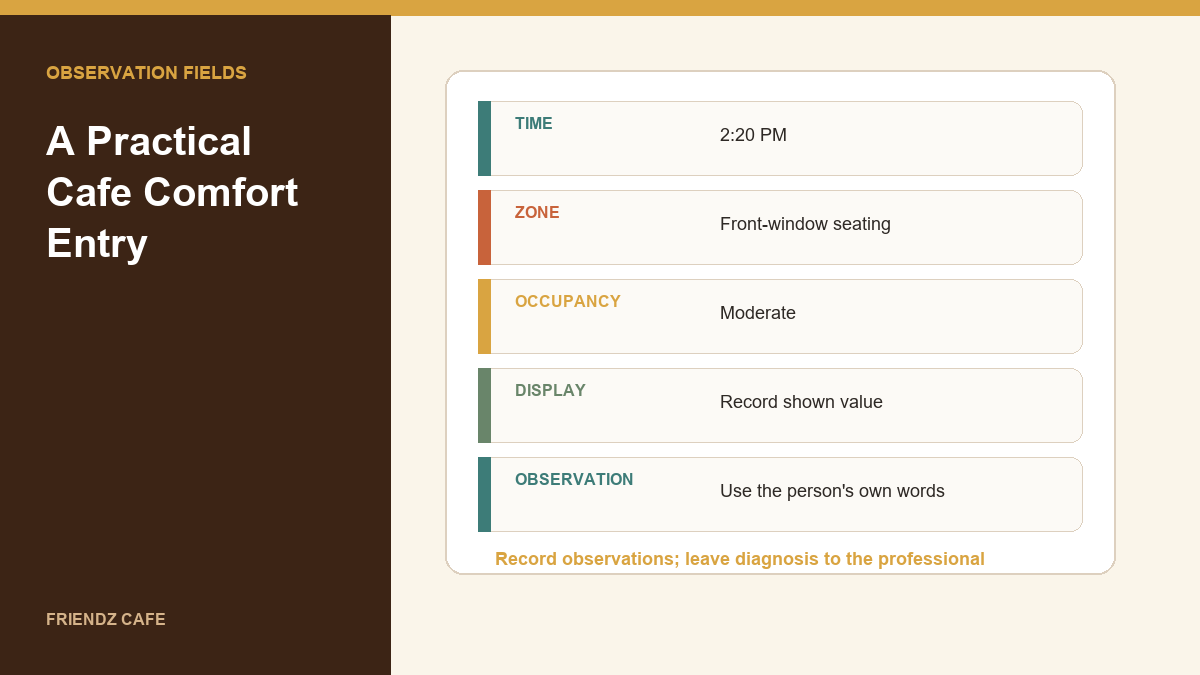
A log does not diagnose equipment, establish a repair timeline, reduce a bill, prove a warranty claim, or determine lease responsibility. It records what people observed and what authorized professionals did. Rather than reporting only that a room felt stuffy, a manager can provide the time, seating zone, occupancy level, thermostat display, weather context, and any visible or audible conditions. The professional can then evaluate those observations alongside the building and equipment.
Implementing a logging system doesn’t require complex software. A simple, accessible binder or a shared digital document can dramatically improve how your cafe handles environmental control. Let’s break down the essential components of a practical comfort and service log, helping your team capture the right information without adding unnecessary administrative burden.
Tracking the Time, Zone, and Occupancy Context
When a comfort complaint arises, the immediate context is often the most important clue for diagnosing the issue. An effective log must first capture when and where the issue occurred, along with the operational state of the cafe at that moment.
Begin by recording the time and date, then identify the zone within the cafe. Use consistent labels such as front-window seating, rear banquette, service counter, or restroom corridor instead of a general phrase such as dining room. The same seating choices that help explain how cafes become gathering places can also create distinct areas for facility observations. A small zone map kept with the log helps staff use the same labels.
Equally critical is the occupancy context. A cafe that is at full capacity with every seat taken and a line out the door generates significantly more body heat and humidity than an empty room. Note in the log whether the cafe was busy, moderately occupied, or slow. Also, note if any heat-generating equipment, like a secondary espresso machine or a pastry oven, was running at high capacity during the complaint. This context provides operational context for professionals.
Documenting Odors, Noise, and Visible Moisture
Comfort is not solely about temperature. Indoor air quality and sensory experiences are vital components of a patron’s perception of your cafe. Your log should have dedicated sections for documenting unusual odors, unexpected noises, and signs of moisture, as these are often early warning signs of HVAC issues.
If staff or customers report an odor, record how they described it and where and when it was noticed. Do not ask staff to investigate mechanical spaces or guess at a cause. Smoke, a burning or exhaust-like odor, suspected gas, visible water near electrical equipment, or a person experiencing symptoms calls for the cafe’s emergency procedure and the appropriate emergency service, landlord, building manager, or qualified professional. Keep people away from an affected area when appropriate. The OSHA indoor-air-quality FAQ identifies odors, temperature, humidity, and other observations as useful context in an indoor-air-quality investigation.
Similarly, track any new or unusual noises coming from the vents or mechanical rooms. Rattling, squealing, or grinding sounds should be logged immediately with the time they started and the zone where they are loudest. Furthermore, document any visible moisture. This includes condensation on windows, damp patches on ceiling tiles near vents, or pooling water near the indoor HVAC units. Visible moisture requires professional attention.
Recording Thermostat Displays and Recent Changes
When investigating a complaint, the thermostat is the first point of reference. Your log should include the current reading on the thermostat governing the affected zone, as well as the programmed setpoint for that time of day.
Record the thermostat display and the programmed setpoint without opening, resetting, or altering equipment beyond the controls staff are authorized to use. A perceived mismatch is an observation, not a diagnosis. Avoid recording a guessed room temperature unless the cafe uses a suitable measuring device in accordance with its operating procedures.
Also record recent operational changes: furniture moved near an accessible grille, lighting added, a door frequently propped open, a new appliance put into service, or an unusual production period. Changes in menu and service flow, like those customers encounter when reading a cafe menu and ordering well, may change how and when equipment is used. Document the timing and let the qualified professional decide whether a change is relevant.
Logging Vendor Visits, Actions, and Unresolved Items
A comprehensive log must track not only the problems but also the solutions and ongoing maintenance. Every time an HVAC technician visits your cafe, whether for a routine checkup or an emergency repair, it should be documented in detail.
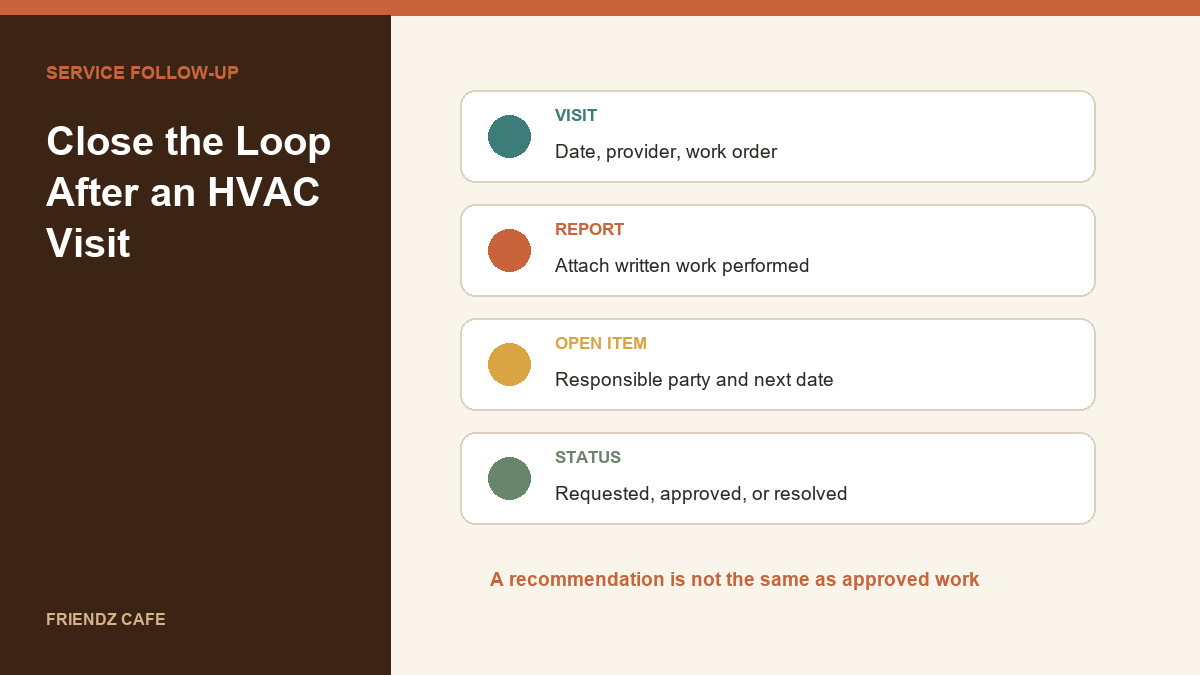
Record the visit date, contracting company, technician name if supplied, work-order number, and arrival and departure times. Attach the contractor’s written description of the work rather than translating technical details from memory. Note any control changes staff need to understand, the authorized party who approved the work, and whether a landlord or property manager received a copy.
Track unresolved items exactly as the professional documented them. Include the responsible party, promised follow-up date, estimate or authorization status, and next check-in. A recommendation is not the same as an approved repair, and the log should preserve that distinction. Responsibility for cost, scheduling, warranty coverage, and lease compliance depends on the applicable records and agreements.
Escalation to Qualified Professionals
The purpose of this log is operational coordination, not technical diagnosis. The cafe’s written procedure should identify who may adjust ordinary controls, who contacts the landlord or service company, and which conditions require immediate escalation.
Establish thresholds for escalation. For example, a single customer noting a draft might simply prompt staff to check that ordinary room furnishings are not blocking accessible vents without touching equipment. However, if multiple customers complain about temperature fluctuations, or if you note persistent unusual odors or visible moisture, it is time to call your contractor. Do not attempt to diagnose or repair mechanical, electrical, or refrigerant issues yourself.
When escalating an issue, share the relevant entries and available service records with the authorized professional. Times, zones, occupancy, odor descriptions, thermostat displays, and recent operational changes give the professional a clearer starting point, but only that professional can determine what the information means. The EPA Building Air Quality Guide describes a systematic approach to investigating indoor-environment concerns. A cafe log supports that process by preserving observations and follow-up in one place.
FAQ
Who should update a cafe comfort log?
A manager or designated shift lead should own the record, while all staff should know how to report an observation. One owner and consistent zone labels reduce duplicate or contradictory entries.
What should a temperature complaint entry include?
Record the time, seating zone, occupancy level, thermostat display, recent operational changes, and the customer’s or employee’s own description. Do not add a technical diagnosis.
Should a cafe share the log with its HVAC professional?
Share relevant entries and available service records with the authorized landlord, building manager, or qualified HVAC professional. The log provides context but does not replace an inspection.
How often should a cafe review the log?
Use a site-specific cadence and review sooner after a repeated complaint, a service visit, or an unresolved follow-up date. The purpose is to notice patterns and close assigned actions.

0 Comments