
Managing an independent cafe means balancing an inviting atmosphere with the practical demands of facility upkeep. Unplanned ladders, noise, and closed seating areas can interrupt the experience customers expected when they walked in. Planned HVAC maintenance is therefore an important part of operating a commercial space. A documented schedule cannot prevent every breakdown, but it gives the cafe, landlord, and qualified contractor a better opportunity to coordinate access and reduce avoidable disruption.
Every cafe has its own operating rhythm. Sales, staffing, delivery, and reservation records can show when particular rooms are busiest and when a service visit would affect the fewest people. Planning also requires a realistic view of the facility: customer comfort, staff movement, landlord responsibilities, and contractor access all intersect. The objective is not invisible maintenance. It is a controlled visit with fewer surprises for everyone in the building.
The goal is to support a comfortable indoor environment while keeping technical work in the hands of qualified professionals. A cafe manager’s role is operational: coordinate people, records, approved access, and communication. The following process keeps those responsibilities clear without asking staff to inspect or repair HVAC equipment.
Understanding the Impact of Maintenance on Cafe Operations
The first step in planning any significant facility work is acknowledging its potential impact on your daily operations. HVAC maintenance is rarely a silent or invisible process. Technicians need access to thermostats, return and supply vents, and mechanical rooms. This access can temporarily displace seating areas, create noise, and introduce unfamiliar personnel into your staff’s workspace. Understanding these disruptions allows you to mitigate them effectively.
For example, a technician may need an approved route to rooftop equipment or a temporary work zone below a ceiling unit. Those facts can affect seating, deliveries, and customer flow. Use the cafe’s own records to identify possible service windows, then confirm feasibility with the landlord and contractor. The same customer-experience details discussed in how cafes become gathering places should inform the maintenance plan: protect clear routes, usable seating, and straightforward communication.
Coordinating with Landlords and Qualified HVAC Contractors
Many independent cafes occupy leased space, which adds a layer of coordination. Start with the actual lease, property-management instructions, and any existing service agreement. Those documents may identify who can approve work, select a contractor, provide controlled access, or pay particular costs. If the documents are unclear, ask the landlord or a qualified adviser rather than treating a general checklist as an interpretation of the agreement.
If the cafe is responsible for hiring the contractor, use a qualified HVAC professional and describe the building use before accepting a service window. Share the cafe’s preferred hours, expected occupancy, delivery schedule, and any landlord restrictions. Ask what scheduling options are actually available; do not assume that after-hours work, roof access, or a particular technician can be provided.
When discussing the scope, use reliable guidance as a planning reference rather than a substitute for equipment instructions. The ENERGY STAR small-business energy and water efficiency toolkit recommends qualified HVAC maintenance, seasonal tune-ups, appropriate filter attention, and clear supply and return airflow. The contractor, manufacturer instructions, and site conditions should control the technical scope for the cafe’s actual system.
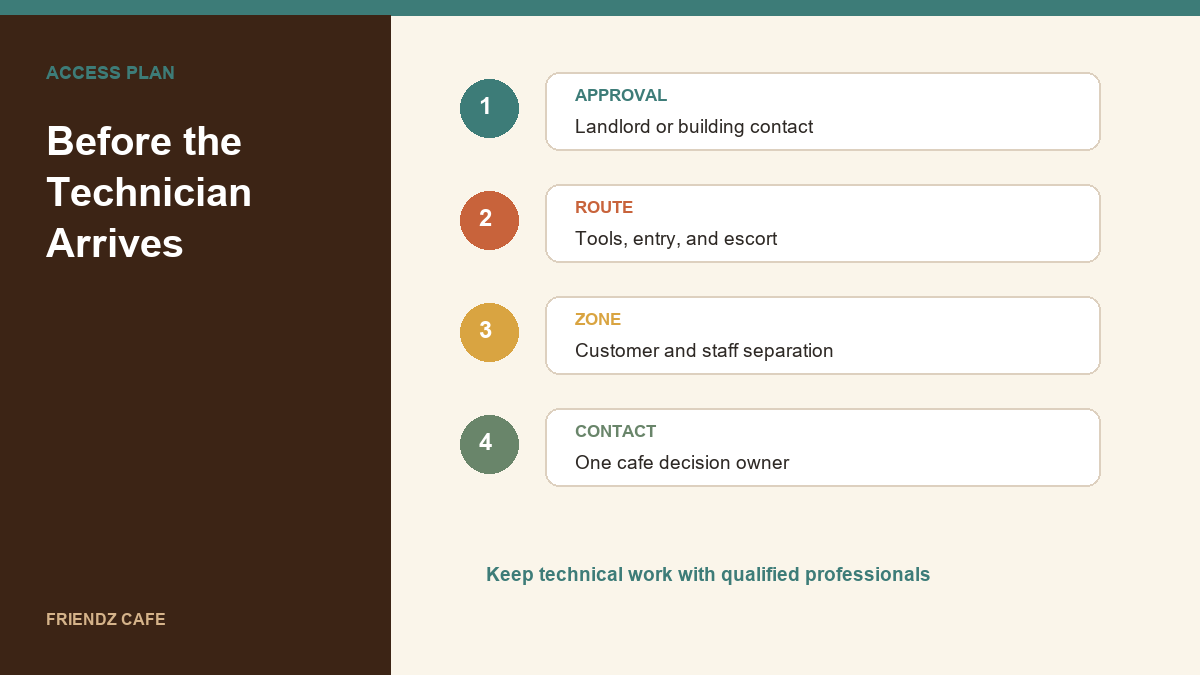
Discuss access requirements in advance. Ask whether the contractor needs building-authorized roof access, an escort, a utility-room key, a parking location, or space for tools. Confirm who is permitted to provide each item. Resolving those questions early can reduce waiting and keeps cafe staff from improvising access to controlled areas.
Establishing Clear Work-Zone Separation and Access Protocols
When maintenance must occur during operating hours, agree on separation between the work zone and occupied areas. A ladder or open work area should not share space with customer seating or normal staff traffic. The contractor and building manager should determine the safe boundary; cafe staff can then adjust seating and communication around that plan.
If the system and scope allow phased work, ask whether one seating zone can be closed while another remains available. Use signage and barriers that the building manager or contractor approves. Keep the message simple: identify the unavailable area and direct customers to a usable route. Do not promise a completion time until the contractor has confirmed it.
Access protocols are equally important. Map the route technicians may use for tools and removed materials. If a rear or delivery entrance is safer and permitted, agree on that route in advance. If the only route crosses a public area, schedule and isolate it with the contractor instead of asking staff to direct technical movement on the fly.
Keep ordinary furnishings, stock, and decorations away from accessible supply and return grilles. Controlled mechanical rooms should remain under the building’s access rules; staff should not enter or move equipment they are not authorized to handle. A pre-visit question to the landlord or contractor can identify any nontechnical clearing that is appropriate.
Communicating Effectively with Your Cafe Staff
Staff manage the customer experience even though they do not manage the technical work. A short briefing helps them direct customers, protect the agreed work zone, and refer technical questions to the designated contact.
Share the confirmed date, arrival window, affected areas, and the name or role of the cafe contact. Label the duration as an estimate unless the contractor has committed to it. Note which seating, entrances, or service stations will change and what staff should do if the scope expands.
Designate a manager or shift lead to greet the technician, connect them with the landlord or building contact when needed, and keep the service report with the cafe’s records. Other staff should know who that person is so access and scope questions do not receive conflicting answers.
If the visit creates noise or changes seating, staff can acknowledge the temporary inconvenience and point customers toward an available area. The courtesy principles in working in a cafe etiquette apply in both directions: customers need clear expectations, and staff need room to keep safe routes open.
Post-Maintenance Documentation and Reopening Checks
The operational handoff continues after the technician finishes. Documentation and a manager walkthrough can confirm what the cafe can observe—cleanliness, access, seating, and open questions—without claiming to verify mechanical performance.
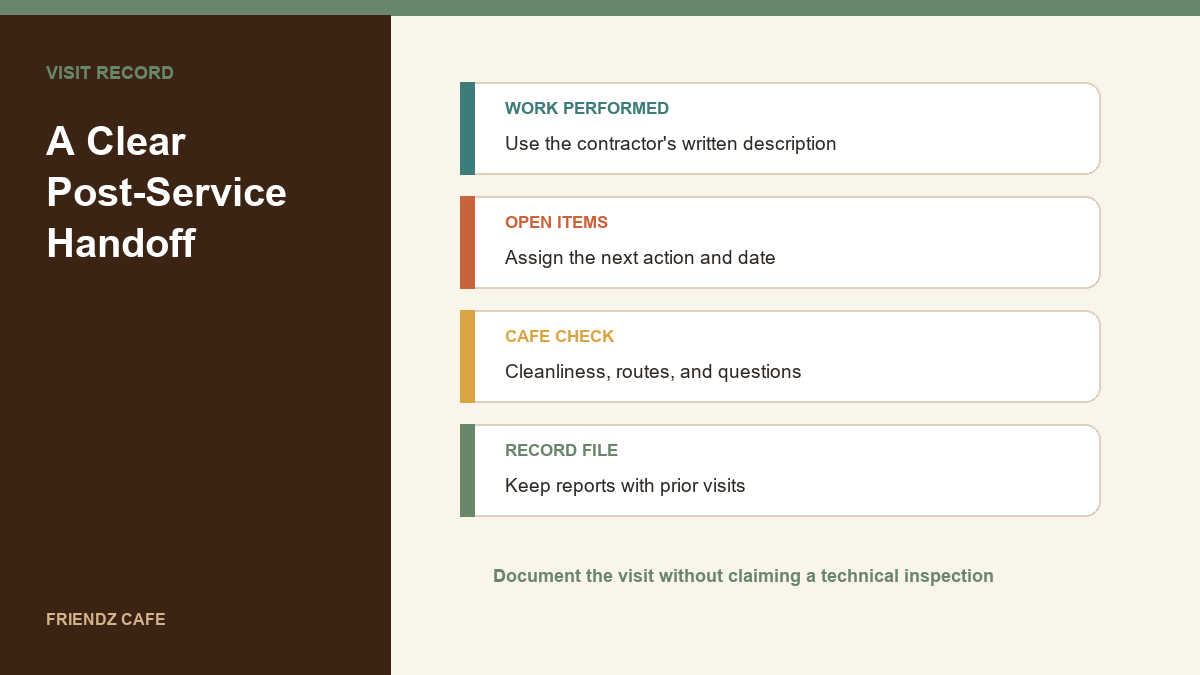
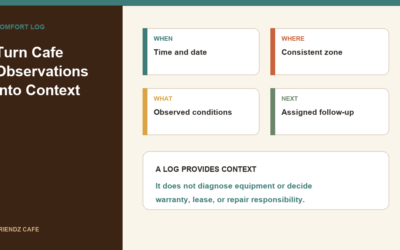
Request a service report that records the work performed, parts identified by the contractor, open recommendations, and any follow-up the contractor proposes. Keep it with prior visits and the relevant agreement. The record may help a future technician understand history and may support discussions with a landlord, insurer, or warranty provider, but it does not by itself prove compliance or coverage.
Before fully reopening the affected zones to customers, perform a walkthrough. Check that the work area has been left clean and free of debris. A walkthrough serves as an operational check for cleanliness, access, obvious damage, and items needing contractor clarification.
This check helps the manager identify anything that still needs contractor or building-manager attention before the zone returns to normal use. The EPA office-building occupants guide also emphasizes coordination among occupants, tenants, building management, and contractors when ventilation or maintenance responsibilities are shared.
FAQ
When is the best time to schedule routine HVAC maintenance for a cafe?
Use the cafe’s own traffic and staffing records, then coordinate the proposed window with the landlord and qualified contractor. The right time depends on the building, system, scope, and available access.
How should I communicate with customers if HVAC work must happen during open hours?
Use approved signage to identify the unavailable area and direct customers to a usable route. Give staff the confirmed facts and avoid promising a completion time the contractor has not confirmed.
What should I do before the HVAC technician arrives?
Confirm the authorized access route, escort, keys, parking, affected seating, and cafe contact. Staff may move ordinary furnishings when appropriate, but should not enter controlled areas or handle HVAC equipment.
Why keep HVAC service records?
Records preserve the contractor’s description of completed work, open recommendations, and visit history. They can inform future conversations, but do not themselves prove warranty coverage, lease compliance, or equipment condition.

0 Comments